Are you running a small registered AIFM? If so, the FCA’s latest proposals mean you will need to make a decision before 2028. Under Consultation Paper CP26/28 and HM Treasury’s draft regulations, the small registered AIFM regime is set to be abolished, and most registered managers will need to become fully authorised, with no grandfathering of their current status.[1] Broadly, firms will have three options: become authorised, exit the regime, or move onto a regulatory hosting platform. Interestingly, the FCA itself expects some firms to take the hosted route.[2]
What is changing?
In July 2026, the FCA published CP26/28, The UK AIFM Regime,[3] together with HM Treasury’s draft Alternative Investment Fund Managers Regulations 2026.[4] Between them, they replace the UK’s AIFMD framework with a new regime that splits managers into small, medium and large categories based on their net asset value.
As part of this, the Treasury proposes to remove the registration regime. Unauthorised property fund managers and most other registered managers will need to become authorised. There are exceptions for managers of Registered Venture Capital Funds and Social Entrepreneurship Funds, which will be separately considered as part of a wider review. Transitional arrangements are to be set out before the new regime comes into force in 2028.[5]
Why is this happening ?
At present, registered AIFMs are relatively lightly regulated, in that they are not subject to the FCA’s Threshold Conditions or Principles for Businesses, are not required to hold capital and do not need to appoint senior managers.[6] The Treasury’s view is that the regime “adds significant complexity and risks misleading consumers on the level of protection they are afforded”.[7]
There is also a particular focus on retail exposure. Around 57% of the NAV managed by small registered AIFMs is held by retail investors, compared with 15% for small authorised AIFMs and 20% for full-scope managers.[8] The FCA points to poor practice by some firms, including “inappropriately opting-up retail investors to quasi-professional status to sell them high-risk products”, which it aims to address.[9]
How many firms are affected?
The FCA counts 145 small registered AIFMs. Once venture capital and social entrepreneurship fund managers, internally managed investment companies and expected exits are taken out, it estimates that around 69 firms will go through authorisation.[10]
Option 1: Become authorised
Authorisation is the most obvious route, but also the most demanding, and so may not be suitable for many of the affected firms. Firms will need to meet the Threshold Conditions, hold regulatory capital and appoint senior managers under the Senior Managers & Certification Regime, as well as put in place a compliance framework covering valuation, risk management, liquidity, delegation and investor reporting. The draft rules also expect “at least two independent minds” to direct every authorised AIFM,[11] which could be a challenge for small teams.
The FCA estimates the compliance cost at around £71,000 one-off and £105,000 a year per firm, and that is before the cost of the authorisation process itself, and any regulatory capital.[12]
That said, there are some upsides. Newly authorised firms can join the new small AIFM category, which comes with proportionate rules and no requirement to appoint a depositary,[13] as well as lighter fund reporting. Firms would also have their own permissions and full control of their business. Timing is worth bearing in mind, though. The FCA has up to six months to decide a complete application, which may require many months of preparation, and up to 12 months to decide in cases where an application is incomplete.[14]
Option 2: Exit the regime
For some managers, the cost simply won’t make sense. The FCA expects around 10% of in-scope registered AIFMs to leave the regime, whether voluntarily or because they are unable to meet the required standards.[15] Exiting could mean winding down existing funds, stopping new fundraising or transferring the management of funds to another AIFM, each of which will need careful planning with investors in mind.
Option 3: Move onto a hosting platform
The FCA expects firms that remain to comply “either by hiring compliance professionals in-house or outsourcing compliance support through a regulatory host”.[16] It also anticipates that some will consolidate into “wider group or umbrella structures” to “share fixed compliance and governance costs”.[17]
With a hosted model, the manager runs its strategy under an authorised host AIFM’s permissions, while the host provides the compliance, risk oversight, valuation governance and reporting framework. The manager keeps its own brand and investment team, but avoids having to build and fund a standalone authorised firm. It is usually much quicker than applying directly too; at Laven, clients can realistically expect to be onboarded and carrying out regulated activities within one to two months of signing.
It is worth noting that an Appointed Representative cannot manage an AIF, so hosting for fund managers means operating under a host AIFM through secondment. However, a manager could become an Appointed Representative and act as investment adviser to a third-party AIFM, depending on how much control the team needs, and many of our clients opt to pursue both secondment and AR streams in tandem if Laven is acting as the AIFM.
Which route is right for you?
The answer will depend on each firm’s plans, but the table below gives a broad comparison.
| Authorise | Exit | Be hosted |
Control | Full | Not applicable | Shared with the host (Laven is performance agnostic) |
Cost | Highest fixed cost | Wind-down or transfer costs | Shared platform fees |
Time to implement | FCA has up to 6 months (12 if incomplete) to decide an application | Depends on fund terms | Typically 1–2 months on Laven’s platform |
Best suited to | Growing, established managers planning to scale in the near term. | Managers with no plans to raise new funds | Managers with one or two funds and small teams, or larger firms looking for a simple, cost-effective alternative to direct authorisation. |
Sources: Financial Services and Markets Act 2000;[18]
When do firms need to act?
The consultation closed on 22 October 2026,[19] with final rules expected to be announced in 2027, and the new regime coming into force in 2028. Our advice would be to start thinking about this now, and set in place a plan as soon as possible. Firms looking at authorisation should begin preparing early, and those considering a host should start conversations well before the transition period ends.
How Laven can help
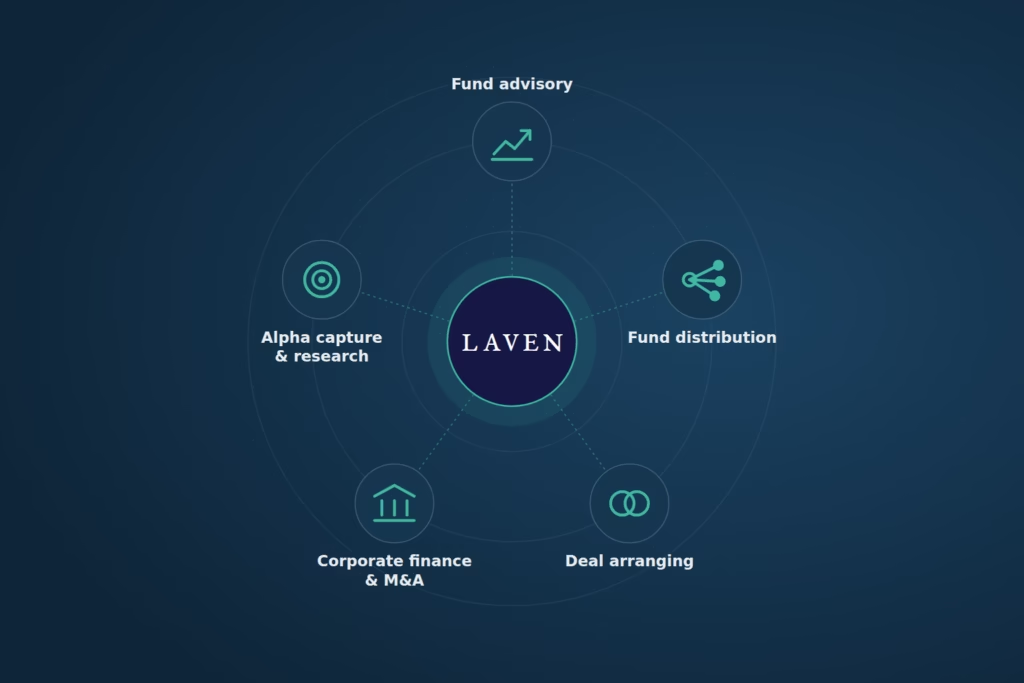
Laven has provided regulatory hosting since 2005. Our platform allows managers to run alternative investment strategies for professional investors under our AIFM permissions, with compliance, oversight and reporting built in. If you are a registered AIFM weighing up your options ahead of 2028, please get in touch with our team.
Bibliography
Financial Conduct Authority (FCA), The UK AIFM Regime, Consultation Paper CP26/28 (London: Financial Conduct Authority, July 2026), https://www.fca.org.uk/publication/consultation/cp26-28.pdf.
Financial Services and Markets Act 2000, c. 8, s. 55V, https://www.legislation.gov.uk/ukpga/2000/8/section/55V.
HM Treasury, ‘Draft Regulations for Alternative Investment Fund Managers: Policy Note’, GOV.UK, 14 July 2026, https://www.gov.uk/government/publications/alternative-investment-fund-managers-regulation-draft-si-and-policy-note/draft-regulations-for-alternative-investment-fund-managers-policy-note.
[1]Financial Conduct Authority (FCA), The UK AIFM Regime, Consultation Paper CP26/28 (London: Financial Conduct Authority, July 2026), p. 5, https://www.fca.org.uk/publication/consultation/cp26-28.pdf.
[2]FCA, The UK AIFM Regime, p. 109.
[3]FCA, The UK AIFM Regime.
[4]HM Treasury, ‘Draft Regulations for Alternative Investment Fund Managers: Policy Note’, GOV.UK, 14 July 2026, https://www.gov.uk/government/publications/alternative-investment-fund-managers-regulation-draft-si-and-policy-note/draft-regulations-for-alternative-investment-fund-managers-policy-note.
[5]HM Treasury, ‘Draft Regulations for Alternative Investment Fund Managers’.
[6]FCA, The UK AIFM Regime, pp. 95–96.
[7]HM Treasury, ‘Draft Regulations for Alternative Investment Fund Managers’.
[8]FCA, The UK AIFM Regime, p. 96.
[9]FCA, The UK AIFM Regime, p. 96.
[10]FCA, The UK AIFM Regime, p. 126.
[11]FCA, The UK AIFM Regime, p. 282.
[12]FCA, The UK AIFM Regime, p. 128.
[13]FCA, The UK AIFM Regime, p. 57.
[14]Financial Services and Markets Act 2000, c. 8, s. 55V, https://www.legislation.gov.uk/ukpga/2000/8/section/55V.
[15]FCA, The UK AIFM Regime, p. 126.
[16]FCA, The UK AIFM Regime, p. 109.
[17]FCA, The UK AIFM Regime, p. 109.
[18]Financial Services and Markets Act 2000, s. 55V.
[19]FCA, The UK AIFM Regime, p. 2.
This article is for general information only and does not constitute legal or regulatory advice. Laven Advisors LLP is authorised and regulated by the Financial Conduct Authority (FRN 447282).